Showing posts with label Hispanic. Show all posts

Friday, March 27, 2020

HITN Launches Content and Services to Help Hispanic Families Cope with the Coronavirus Threat

BROOKLYN, N.Y.--HITN announced that it has launched a full-scale effort to provide Hispanic families with information, resources and services that may help them navigate through the COVID-19 global pandemic. These efforts are led by HITN’s health and wellness brand, Vida y Salud, and include information on its website, daily television block, newsletters and social media accounts. In addition, HITN Television is broadcasting special messages and public service announcements throughout its programming.

“The most useful and practical thing that we can do as a multimedia company is to raise awareness and provide content and services that help keep our audience and their families safe, informed and even entertained in these difficult times of uncertainty and fear,” said Guillermo Sierra, Head of Television and Digital Services at HITN.

The first part of the campaign is the adoption of the #YoMeQuedoEnCasa (“I’m staying home”) campaign. Through this simple message, adapted from the viral European experience, HITN is continuously reminding viewers that the best way to reduce the transmission of the virus is staying at home and avoiding physical social interaction.

To maintain viewers informed about the progression of the emergency, HITN has partnered with The Health Channel (a South Florida PBS service) to produce daily news briefs that are broadcast at the top of the hour, every hour, during primetime. The reports called “ Coronavirus en Tiempo Real ” (Coronavirus in real-time), are also shared with national Hispanic cable networks Vme and Mexicanal, and through several digital outlets.

The site VidaySalud.com has also created a robust microsite that provides the latest information and recommendations from the CDC about the condition and its management in Spanish-language. The site is complemented by newsletters sent directly to the subscribers’ emails and by several daily posts in social media. For Latin America, VidaySalud.com is also offering a free live chat with medical experts and psychologists who provide users with general information that may help them respond about the situation.

“HITN has activated all of its digital properties to provide information and guidance during these critical times. Our high levels of reach and position are allowing us to connect with the audience in an active and meaningful way”, said Maximiliano Vaccaro, Vice President of Digital Services for HITN.

In addition, HITN.TV, the channel’s website, is offering special content dedicated to helping viewers stay active and relaxed while at home or under quarantine, including exercise, yoga, and meditation programs, as well as creative ideas that include activities to do with the whole family without leaving home.

“It is quite evident that our viewers have heeded the #YoMeQuedoEnCasa call and are enjoying the high-quality programming HITN offers Hispanic families. This adds up to what we have been observing over the last several months, where the network’s numbers have been on a consistent uptrend, week after week out-performing itself, delivering the highest Total day numbers HITN has seen in the history of its measurement, especially during Prime time. With top programs like Al Descubierto, Tesoros de Asia, Mundo Salvaje con Ron Magill, Centro Médico, and Historia de la vida, among many more, Hispanic families continue to prove that HITN is the network of choice for entertaining and educational content in Spanish,” said Erika Vogt-Lowell, Director of Programming and Acquisitions for HITN.

For more information on HITN’s coronavirus campaign visit: https://cdn.jwplayer.com/previews/cbOI8xNA-TlEIfZWJ


HITN-TV is a leading Spanish-language media company that offers educational and cultural programming for the whole family. It reaches more than 44 million viewers in the US and Puerto Rico via DIRECTV, DIRECTV NOW, DISH Network, AT&T U-verse TV, Verizon FiOS TV, Comcast, Charter Spectrum, Mediacom, CenturyLink Prism and Altice. For more information, please visit www.hitn.org.

Thursday, August 27, 2015

Comcast looking for two Hispanic networks

Comcast will be looking network proposals for content, financed, ownership/management, price, launch, and ability to create customers.

PHILADELPHIA--(BUSINESS WIRE)--Comcast Cable today announced the company is now accepting proposals for two substantially Hispanic American owned, independent English-language networks that it will launch in select Comcast markets by January 28, 2017.


Today’s announcement is part of the company’s commitment to launch 10 independently owned and operated networks as part of a series of public interest commitments made by Comcast in connection with the NBCUniversal transaction completed in 2011. Of the 10 networks, all of which are to launch by 2019, four will be majority African American owned, two will be operated by Hispanic American programmers, two will be substantially Hispanic American owned, and two will be independent. These criteria were established based on several agreements Comcast entered into with leading diversity organizations in 2010. Since then, five independent networks have already successfully launched, including ASPiRE, BabyFirst Americas, BBC World News, El Rey, and REVOLT.


“We are committed to delivering programming that reflects the interests of our customers and are eager to review many innovative network proposals with the potential to bring new and exciting content to our customers,” said Greg Rigdon, Executive Vice President, Content Acquisition for Comcast Cable.


Criteria for selecting the next two substantially Hispanic American owned networks that Comcast will launch include: the content of the network; whether the network is fully financed; whether the network’s ownership and/or management group(s) are well established, have relevant experience, and are substantially owned by Hispanic Americans; whether the network is already launched and has existing MVPD distribution; price; and whether the network and its potential carriage provide value to Comcast and its customers. Comcast will accept proposals for every major genre, including general entertainment, movies, music, kids, news, and sports.


Applicants may visit http://corporate.comcast.com/diverseprogramming to submit a proposal and learn about the terms and conditions. Proposals are due by October 9, 2015, and the two networks will be selected in the coming months. 


Sunday, July 5, 2015

Latina Web Series Innovator and Webstar Pioneer

Ruth Livier

Ruth Livier, an ESL kid from a trailer park has become a Web Series Innovator and Webstar Pioneer.

By Dr. Al Carlos Hernandez

Ruth Livier is not just another alluring Hollywood beauty. She has substance, style, and is an in-demand working actress of stage, screen, and film. Ruth is probably best known for her starring role in the groundbreaking Showtime TV series Resurrection Blvd. and for breaking new artistic ground almost seven years ago when she created, wrote, and starred in Ylse[1], one of the very first made-for-the-Internet series.

Ylse (Ylse.net) won many awards including the first IMAGEN award for Best Internet show.[2] It also landed Ms. Livier on the cover of the WGA’s Written By[3] magazine for becoming the first person to join that union via her work in new media.

Ruth’s journey began in Guadalajara, Mexico.

“Soy Tapatía,” she told us. “Until I was about seven, I lived with relatives in Guadalajara while my
parents worked in the fields here in California…. Once I crossed to the US and learned to read English, you couldn’t get me out of the library. I was a very serious kid…. Theatre and acting have been a part of my life since my first professional gigs back in Guadalajara. I also love to write…. Writing Ylse and seeing my amazingly talented friends bring my words to life was a fantastic, rewarding, and addicting experience.”

We asked Ruth about Resurrection Blvd. and here is some of what she shared: 


“…The show was truly groundbreaking and the people I got to meet and work with were just incredible. I mean, aside from the countless amazing experiences on set, I was invited to the Executive Offices in Washington, DC. There I was, sitting at a conference table with Robert Rodriguez, Esai Morales, and other prominent Latino celebrities while government representatives asked our opinion on the state of Hispanic representation in the entertainment business. For an ESL kid from a trailer park…well, that was one of the best and most surreal moments the universe has sent my way.”

When we asked her if Hollywood still stereotypes she said, “According to every report and study, the answer is still, unfortunately, yes.”


Ylse (Ylse.net) was a pioneering effort. It set the stage for the hit web based programs that seem to sweep the Emmys nowadays. “Our goal was to make something we could all be proud of and my amazing cast and crew, including the wonderful and great late Elizabeth Peña, who directed a webisode for us, did just that. I’m proud of our work on Ylse and I’m excited to bring the lessons learned to the new projects I have in the works.” 


[1] http://www.ylse.net/

[2] https://www.youtube.com/watch?v=HmWBHzQCCgo

[3] http://bluetoad.com/publication/?i=25606


Thursday, January 22, 2015

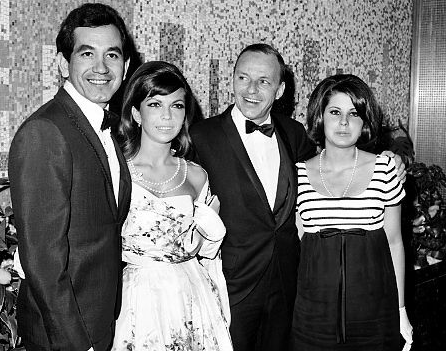
Latino Rock'n Roll Music Legend: Trini Lopez

50 Years of ground-breaking Rock'n Roll from Trini Lopez
Dr. Al Carlos Hernandez, Hispanic News on-line
Edited by Susan Aceves

     From the barrio to Beverly Hills, this folk singing sensation took the world by storm beginning in the early 1960's and continues the tempest even today. Trini elicits standing ovations everywhere he performs and his smooth style knows no age barrier.
     Exhibit Records has just released a Special 50th Anniversary Numbered Limited Edition album of Trini Lopez "At PJ’s." The 200 gram vinyl record is presented in a sturdy old style gatefold jacket featuring the original album art work and, for the first time, includes the lyrics to all the tunes. The back of each album is foil-stamped with its unique number.
     With the release of the PJ album in April 1963 Trini Lopez became one of the biggest singing stars of the Folk Revival. At PJ's made it to #2 on the Billboard charts and stayed in the Top 40 for over a year. The album included the chart-topping If I Had a Hammer which reached number one in 36 countries and was a radio favorite for many years. The hit single sold more than 4 million copies; the album sold over a million and was awarded a gold record.
     This was the album that made Lopez an instant success and the live party atmosphere of the record did much to put Trini's likable energy over the top. What Lopez did at the head of a trio was to make folk-pop swing. Other songs include This Land Is Your Land and Gotta Travel On. It could be surmised that by treating such material in this fashion, Lopez had a tiny influence upon the subsequent folk-rock movement...though, Lopez was more the all-around entertainer with a Latin lilt than he was a pure folk singer, so you also get America (from West Side Story), La Bamba, Ray Charles' What'd I Say, Volare, and When the Saints Go Marching In.
     Trini was a poor young man from the barrio of Dallas, Texas. He remembers there being barely enough food for the family, the amount always determined by his parents' ability to get whatever work they could. "They worked and struggled together just to survive," he recalls. "They plowed fields together. My mother washed clothes in the neighborhood for extra income. You cannot imagine how hard it was."
     When he was eleven years old, his father spanked him for "hanging around with the wrong kind of kids"...what a wise man he was to lead his talented son from a life of street gangs to a life of sophisticated graciousness. Trinidad Lopez, Sr. felt so bad about the spanking he had given his son that he bought him a $12.00 guitar he really could not afford. Trini says, "A spanking literally changed my life."

     Trini learned to play the guitar from his father. Then he played for money on the street corners. He eventually went on to form his own group. It was then that the world saw the beginnings of the singing, acting, and very talented Trini Lopez. Trini's first songs were Mexican sing-alongs with his mother, father, brother, and sisters.
     He dropped out of high school to help his father support the family by singing around Dallas and the Texas "Southland." Trini's quality could not be denied. He went on to the El Cipango Club in Dallas (a more affluent part of Dallas) and to other big clubs throughout the Southwest. He realized music would make him something special. Indeed it did, enabling him to get himself, and his family, out of the barrio.
     When Trini was 18 years old, King Records in Cincinnati, Ohio, heard that Trini had written and recorded a single in Dallas on a little label called Volk Records. The name of the song was The Right to Rock.  From the beginning the record producer wanted Trini to change his name to anything but Lopez. Trini was, and is, proud of his heritage and was devastated by the situation.
     Trini refused and was heading out the door when the record producer stopped him and said, "Okay, okay, you can keep your name." The single made a little noise in Dallas, enough noise for King Records to be impressed with Trini's voice and style. King Records offered Trini a recording contract and for three years and flew Trini from Dallas to Cincinnati to record for two weeks at a time. Unfortunately, the only songs they were giving Trini to record were old country songs they had in their catalog by country artists such as Cowboy Copus. Since I Don't Have You. The song hit the Top 10 nationwide, and Trini was elated to see his name on Cashbox, and Billboard. The only other song on King Records Trini had that was a No. 1 hit in his hometown of Dallas was a song called Don't Let Your Sweet Love Die.

     Once in a while in some recording sessions, Trini would slip in some of his own compositions that were more up to date. The only song to hit the charts nationally on the King label for Trini was a song Trini covered by the Skyliners called Trini befriended the famous recording artist Mr. Buddy Holly, a fellow Texan. Buddy Holly asked if Trini would like to meet his record producer in Clovis, New Mexico. Trini was elated and packed his station wagon with his group and drove to Clovis with the hopes of recording. Buddy Holly's record producer turned out to be prejudiced because of Trini's heritage. He would not allow the use of Trini's name on the record label. Trini's group agreed with the conspiracy against Trini's Latin name, and they agreed not to allow Trini to sing on the record. The record was released as an instrumental under the name "The Big Beats." When Trini returned to Dallas, he disbanded the group and assembled a new band.
     While in Clovis, Trini befriended not only Buddy Holly but also his band, The Crickets. As fate would have it, two months later, Buddy Holly was killed in the fatal plane crash along with Richie Valens and The Big Bopper. A couple of months after the plane crash, Trini received a phone call from The Crickets asking him to come to Hollywood to be their lead singer. Trini was ecstatic and, instead of flying, he used the money sent by The Crickets to drive his station wagon to Los Angeles. All through the two and half day trip Trini kept saying to himself, "Hollywood or bust! Hollywood or bust!!!" In 1960, Trini arrived in H-O-L-L-Y-W-O-O-D driving his old station wagon with "Trini Lopez and his Combo" painted on each side.

     The agreement Trini had with The Crickets did not materialize because The Crickets were enjoying their royalties and record sales from Buddy Holly's past hit recordings and were in no hurry to perform. Lopez left Dallas with $200 and it was soon gone. He had promised he would be sending monies to his parents from his engagements in California. Out of desperation, Trini Lopez, the soloist was born.
     Trini got a job at the Ye Little Club in Beverly Hills. He was hired with no group, just with his guitar. His engagement was to last two weeks and ended up lasting a year. The first big break came at the popular night spot called P. J.'s. Here he was spotted by the world famous record producer, the late Don Costa, who then brought Trini to the attention of his longtime idol, Mr. Frank Sinatra. The great singer recognized a fellow stylist and immediately signed Trini to an exclusive eight-year contract with his own label - Reprise Records.

     Reprise released his first album Trini Lopez at P. J.'s, which became a No. 1 hit album. Out of that album a single If I Had a Hammer became a No. 1 hit in thirty eight countries. If I Had a Hammer hammered his name in GOLD with many hit albums and many hit singles ... and in the hearts of millions of fans throughout the world! Following Hammer were many hits which he wrote, as well as songs like I'm Coming Home Cindy, Michael, Lemon Tree, Kansas City, America, and, of course, La Bamba. The list of songs he made famous goes on. It wasn't until If I Had A Hammer ultimately sold five million copies (and still selling throughout the world) that he got it through his head he IS something special.
     He began by playing a priest and a parole officer on two of Jack Webb's Adam 12 TV shows for Universal, which was aired on the NBC network. From there he went to movies. Frank Sinatra cast Trini's in his first appearance: the movie, Marriage on the Rocks, which also starring Frank Sinatra and Dean Martin. His second movie appearance was in A Poppy is Also a Flower starring Sean Connery, Marcello Mastriani and a star-studded cast. Following this was the classic The Dirty Dozen starring Lee Marvin and Charles Bronson and another star studded cast. Trini's first starring role was in Antonio with his co-star, the infamous "J.R.," Larry Hagman. Then he became an army G.I. for a TV Movie of the Week called The Reluctant Heroes for Aaron Spelling Productions.
     The future for Trini will be as active as usual with touring around the world, a new album in the making, and hopefully a movie, but now he is more selective and chooses his projects carefully. Since his move to Palm Springs, where he now resides year-round, the "laid-back" atmosphere has sort of rubbed-off on him, and it's not necessary for Trini to do every project he's offered. So, you'll find him on the tennis courts or golf course almost any day, as it has become a new passion with him and he has the trophies to prove it.

Dr. Al Carlos Hernandez, was honored to speak with the music legend.

AC: Tell us about growing up poor in Dallas. Was your first language Spanish? Tell us a little about your family.
TL: Growing up in Dallas was very difficult for me. My family and I lived in a two room house and it certainly was crowded. My first language was Spanish. My father and mother were very poor, but they were very rich spiritually.

AC: What kind of music did you listen to around the house? Your dad was musically talented?
TL: I listened to Spanish music around my house growing up - my father taught me my first Spanish songs at a very young age.

AC: Did growing up poor color your musical choices later in life by pursuing folk music which was known for its commentary on social change?
TL: Later on in my life, folk music influenced my very much because folk music, at that time, had a very interesting message. Being poor had nothing to do with it.

AC: What gave you the courage to take your music to Dallas' more affluent clubs? Did you consciously want to cross over and play to English speaking audiences?
TL: I started singing English songs to Anglo people from the beginning of my career. The more affluent clubs in Dallas approached me because of my reputation as an entertainer at that time.

AC: How did Latinos in your community react to the idea of you doing songs in English?
TL: My Latin friends enjoyed hearing me sing rock and roll and popular songs.

AC: What did the Anglo audiences think of you at first and did you have to win them over?
TL: I was always very lucky, whether the audience was Latino or Anglo, they always enjoyed my singing.

AC: Tell us about landing your first record deal at 18?
TL: I was contacted by phone by King Records in Cincinnati, Ohio. King Records heard the first record I recorded for a small label in Dallas. The song was The Right to Rock.

AC: The Right to Rock?
TL: When I wrote the song The Right to Rock, I was singing mostly rock and roll.

AC: What kind of a performer did you want to be? An Elvis, a Chuck Berry, a folk singer?
TL: I just wanted to be a popular singer.

AC: Why did you fight so hard to keep your name when the producer wanted to change it?
TL: I was, and am, very proud to be a Mexicano!

AC: Do you think changing your name to an Anglo one could have helped your career?
TL: Yes, very much!!

AC: You were one of the first Latino megastars who kept their Latino name. That took a lot of guts back then. Does the Latino community appreciate this?
TL: I don’t know.

AC: Tell us about the early recordings. How did you feel hearing yourself on the radio? How did your family react to your initial success?
TL: The first time I heard myself on the radio I was driving along in my station wagon and I pulled over to the side of the street. I listened to the whole song and waited until the disc jockey mentioned my name. I was very excited, of course.

AC: Tell us about some of the first songs you had written. Was it harder for a Latino to break into mainstream music at that time?
TL: It was very, very difficult!!! The songs I wrote in my early career were The Right to Rock, Rock On and Only In My Dreams.

AC: How did you meet Buddy Holly and what was that friendship like?
TL: I was appearing at a night club in Wichita Falls, Texas and Buddy Holly was in town at that time to promote his single record That Will Be the Day. The disc jockey who was interviewing Buddy that day was a friend of mine from Dallas. His name was Tommy Garrett. After Tommy’s interview with Buddy, Tommy said to Buddy, “There is a friend of mine from Dallas appearing at a night club here, would you like to go see and hear him?” Buddy said, “Yeah, oh sure.” After my show, Tommy brought Buddy to my dressing room. Buddy Holly was very friendly and very nice. He said to me, “Trini, I really enjoyed your show and I think you are great!" He asked me if I would you like to meet his record producer. That was how I met Buddy Holly.

AC: You mentioned that when Buddy passed away, The Crickets called you to come to Hollywood to replace him.
TL: Yes, when Buddy was killed his group, The Crickets, asked me to come and join them in Hollywood, then go on tour with them as their lead singer.

AC: Tell us about becoming a totally broke solo artist in LA. Your objective was to send home money to your family, correct?
TL: My objective when I first went to Los Angeles was to get a singing engagement as soon as possible because I told my parents I would send them money as quickly as I could.

AC: At that time, who was big in performing and getting good gigs? Who were your contemporaries?
TL: At the time I went to Hollywood in 1960, the people who were getting the good gigs were Frank Sinatra, Perry Como, Dean Martin, and Sammy Davis Jr., etc. My contemporaries were The Everly Brothers, Eddie Cochran, and actor/singer Tommy Sands.

AC: Tell us about PJ’s and meeting Don Costa. What was his impact on your career?
TL: Meeting Don Costa at PJ’s had one of the biggest impacts on my career. Don Costa, at that time, was producing and recording artists like Frank Sinatra and Barbra Streisand.
AC: Because of Costa, you started hanging with people like Sinatra and many other mega stars. How did they treat you?
TL: Because of Don Costa, I had hits on my first two albums recorded live at PJ’s. Right after that, Frank Sinatra wanted to meet me and he introduced me to artists like Dean Martin, Sammy Davis Jr., and many more big stars. All these mega stars treated me with a lot of respect and admiration.

AC: How did you assemble songs for this legendary PJ's album?
TL: I asked Don Costa when we started to record the PJ’s album, “What do you want me to do?” Don said, “Just do your show and we will record it.”

AC: Did you want to be a folk singer? Have you been type-cast as a folk singer?
TL: They wanted to type cast me as a folk singer because at that time folk music was very popular.

AC: How did your life change when the album became a monster hit and Hammer sold five million copies?
TL: Having a hit single and album did not affect me at all. I always have had my feet on the ground.

AC: Did the fame and fortune cause you to go into excesses, like so many artists have over the years?
TL: The only excessive thing I started to do was I spent a lot of money on clothes!

AC: How do you like being a music icon? What is the good and bad of fame for you?
TL: I have enjoyed it all my life. There is no good or bad, it is what you make it.

AC: Tell us about your acting career. How did this all get started?
TL: When I started my career, I was approached by the producer of The Dirty Dozen and he said that he would like for me to play the part of Jimenez in the movie. That’s how it all started.

AC: Tell us about The Dirty Dozen - that was an iconic film. What was that like?
TL: It was very exciting to be a part of such a marvelous cast.

AC: What are some of the highlights of your acting reel? Did you ever consider becoming a full time film and TV actor?

TL: Working and doing a little bit of acting with actors like John Cassavetes and Lee Marvin were some of the highlights. I wanted to do more acting in my career, but it is a very difficult act to get into.

AC: You have never been overtly political but rather you let your music make your statement about things. Have you shied away from political causes considering you are one of the highest profile Mexican-American performers in American History? 
TL: I have purposely shied away from politics.

AC: Is there a reason you have kept a low profile on these sorts of things?
TL: Yes, the reason is I think an entertainer/artist should keep to his own business.

AC: You are involved in many things including a signature series of guitars. Can you tell us about some of your side interests and hobbies?
TL: My only other interest other than my Gibson guitars is I enjoy golf and tennis.

AC: You have continued to travel and tour the world over the years and still keep your music fresh. What motivates you to keep it going?
TL: That is a hard question. It is my inner self and spirit that makes me want to make people happy.

AC: Tell us all about the Special 50th Anniversary Numbered Limited Edition album of Trini Lopez At PJ’s?
TL: My most successful album in my career has always been Trini Lopez Live in P.J’s. I am thrilled Exhibit Records is re-issuing my very first LP in vinyl!!!

AC: Are you planning to tour in support of the re-release?
TL: If I get the right offers, I will.

AC: What can fans expect from the LP?
TL: Beside all of the lyrics being printed on the inside jacket, the recording itself is digitally re-mastered.

AC: How do you think history will remember you?
TL: I hope history will remember me as a down-to-earth person who loves people.

AC: What are some things still on your bucket list?
TL: I would like to do some serious acting.

AC: What would you like your legacy to be?
TL: It’s nice to be important, but it’s more important to be nice.

Monday, October 20, 2014

The Eclectic and Amazing Skateboard Icon turned Musician, Tommy Guerrero


From cofounder of the skateboarding company REAL, to a diverse musical sensation, Guerrero is hitting his stride.
 

As a teenager, Tommy Guerrero was one of the most prominent members of the Bones Bregade, Powell Peralta’s professional skateboarding team that was successful during the 1980′s. He was well known for his relaxed style in street skateboarding and his Bones Brigade footage was primarily filmed in his hometown of San Francisco. The videos Future Primitive, The Search for Animal Chin, Public Domain, and Ban This all featured the street skateboarding of Guerrero.
After riding for Powell Peralta, Guerrero and Jim Thiebaud, a hometown friend and Powell Peralta teammate, started the skateboarding company Real.
Karl Watson, professional skateboarder and founder of Organika skateboards, also grew up in San Francisco and revealed in 2012 that, as a young boy, he moved into a house in which the Guerrero formerly resided. Watson has stated that upon moving into the house, he discovered a drumstick that was used in the Animal Chin movie and explained: “… and that was in my room; and right then and there, I knew that I was destined to be a pro skater.”  Watson referred to himself as “blessed” as he subsequently received packages of skateboard goods that were addressed to Guerrero.
After his success in the world of skateboarding, Guerrero decided to pursue his musical interests and was a member of the skate rock band Free Beer and the experimental group Jet Black Crayon. However, Guerrero’s work as a solo artist has so far been the most commercially and critically successful. Guerrero’s albums, EPs, and various singles incorporate a diversified style of music, from rock, hip-hop, and funk, to soul, and jazz.
Click HERE To Listen
The EA video game skate has featured numerous unreleased compositions that were written and recorded by Guerrero.
In 2004, Rolling Stone magazine named Guerrero’s third studio album Soul Food Taqueria (2003), number two on its 2003 “Best Of” list.
At the 2013 15th Annual ‘Transworld Skateboarding Awards’ Guerrero was the recipient of the ‘Legend’ award. On the red carpet preceding the awards event, Guerrero stated:
I’m super grateful, that anyone really cares, to be honest. Um … conflicted; I’m not one to rest on my laurels and it’s hard to accept accolades for something you did thirty years ago, you know? I’d rather be appreciated for what I do now, but I … I … I’m super grateful … I can’t believe it [street skateboarding in the 21st century]. I mean the technical aspect and the consistency, combined with that, is mind-blowing … but just where it’s at now, is, is insane; I mean, what Rodney [Mullen] sort of started, with the technical aspect, to a whole another level, you know? Making it extremely gnarly, extremely technical … I’d hate to be growing up skating now.
Following his receipt of the Transworld “Legend” award, Guerrero invited all “street skaters” onto the stage to stand alongside with him at the Avalon Theater in Hollywood, California USA.
It’s 2014 and Tommy Guerrero’s resume reads like a dream. Bones Brigade skate team in the 80’s, movie appearances, co-founder of Real Skateboards and 40’s Clothing, art director for Krooked Skateboarding, and prolific recording artist. From the Fat Jazzy Grooves and Another Late Night compilations, to albums for Mo’Wax, Galaxia, Function 8, Rush [Japan], and Quannum and Ubiquity, Tommy Guerrero has lead a full life. Then there’s the collaborations with Lyrics Born, Jack Johnson, Curumin, Bing Ji Ling and Prefuse 73, remixes for Money Mark/Nigo, Poets of Rhythm and Shawn Lee. His band, Jet Black Crayon, has toured with Isotope 217 and Tortoise. He’s scored tunes for Thomas
Campbell’s surf film Sprout, the EA video game Skate and had the honor of being the sole provider of music for Todd Oldham’s show Hand Made Modern on HGTV. His songs have been licensed for zeitgeist television shows like Queer as Folk, Sex in the City, and CSI Miami. His designs are found on Levis in Japan, Vans shoes worldwide, and Sutro eyewear.
Tommy’s music, like his graphic design, is beguilingly simple. He sounds like a guy messing around on his front stoop and maybe that’s exactly what he is – but the result will touch you down to your toes. From Mission District punkers to Shibuya-ku hipsters, his melodies dance lightly around your head while the rhythms build under your feet and move your hips. His is SOUL music, made by a street kid raised on Santana and Bill Withers (with more than a little nod to the Clash and Public Enemy in there, too).
Herald De Paris Special Contributor, Dr. Al Carlos Hernandez took a verbal ride with the post modern mogul, Mr. Tommy Guerrero.

AC: Tell us a little about your folks and growing up in SF. How did those early years influence who you are today?
TG: My brother and I were raised by our mother. We lived with my aunt and cousins on and off over the years. As most people know, San Francisco was much different than it is currently – much more of a working class feel. Now days San Francisco is just rich kids using the city as a stepping stone. No roots will be planted.
           I had a pretty standard lower class childhood and started skating when I was nine. We lived on a hill so that informed my approach to skating.

AC: What was your first skateboard experience like and when did you realize you were really good at it? How does SF lend itself to boarding?
TG: A friend gave me a Black Knight board – clay wheels etc. I was hooked! Where we lived was surrounded by hills so being surrounded by hills forces a skateboarder to learn to deal with speed. You need to develop the skills to control it. The ability to do this became ingrained in the way I skated.
I have never had an epiphany about my prowess on a board and am still waiting…

AC:  When did you become interested in music? Who did you listen to when being inspired? Who would you like to fashion your career after?
TG: I started playing music with my brother when I was around twelve. At that time the punk movement arrived on the West Coast with a fury. We naturally gravitated to it as it went hand-in-hand with skate ideology.
My brother and I went to see The Ramones in ’78; they played a free gig in front of the San Franciscan city hall. That experience changed everything! I wanted to be part of that scene.

AC: Tell us about the Bones Brigade – pro skateboard team – how did you hook up and what about that seminal video shot in SF? How old were you?
TG: The Brigades main guy, Stacy, approached my brother at the second San Francisco street style competition in Golden Gate Park.
My brother Tony told me that they really liked the way I skated and wanted me in but I didn’t believe him. They were major! Then I spoke with Stacy a bit later realized that the offer was real, so I joined.
The future primitive video – that was my “debut” so-to-speak. Stacy and his buddy came to SF for a day. I took them around The City to a bunch of different spots – various places I had been skating for years.
Back then, you didn’t have a year or even a month to film – it was maybe three days at best for a solo part. I wish I had a bit more time but that’s the way it was. I was one of the first to do that sort of thing and it was successful. Hopefully it opened some doors for the skater community.

AC: What is life like as a ‘Pro Skateboarder?’ Travel, shows, completions . . . what is the good and bad of this life?
TG: Being a pro skater was a dream job! You kidding me?! But it was also demanding. It beat the crap out of my body and I am in pain –  even now during this interview!
There is quite a bit of traveling but very little time to really experience any local culture. It was always on to the next event. Always trains, planes, autos, etc… on the constant move.

AC: Tell us about the 2013 annual Skateboarding Awards. When you won the Legend Award you mentioned that it seemed weird receiving an award for doing something 30 years ago.
TG: Actually I wasn’t into it. A couple of friends – Jim Thiebaud and Juilen stranger – convinced me that I sort of had to participate. I am not one to sit back and ruminate on “the good ole days” as-it-were. I’m still being creative and skating and trying to stay in the streets… that’s where life is happening.

AC: After success in skateboarding, you went into music. Tell us about your first bands. How is performing music different than performing as an athlete?
TG: I am still in skating! Me and Jim Thiebaud formed Real Skateboards 23 years ago! Still here, still doing it! Music isn’t my job, not yet anyway.
My first bands were just my brother and friends playing punk. I grew up playing bass. The guitar just happened out of necessity – just as being a solo musician.
We played all the local San Francisco punk clubs – the Mab, the On Broadway, Ruthies Inn, Tool and Die, etc. We played with similar bands such as Fear, Bad Brains, D.O.A., Social Distortion, Minor Threat and so on.
I don’t consider myself to be an athlete nor do I feel that skating is a performance for me. It’s part of life. Competitions were necessary at the time, so I learned how to play the game. I was decent at it.
Playing to an audience can be nerve wracking. Putting your soul on the line isn’t easy and people love to criticize and diminish others for what they do. It’s difficult.

AC: Your solo work is critically and commercially very successful. Tell us a little bit about each of your albums.
TG: Ha! I wouldn’t say successful by any means. Very few people actually pay for music anymore. The only way an indie artist can make any sort of income is to license work. Definitely not commercially successful. All of my albums are written/recorded at the same time. I don’t make demos etc. It’s very spontaneous, raw and of-the-moment.
I don’t like flogging songs until they become lifeless; then you’re just going through the motions which loses the emotional impact of the tune.

AC: You incorporate jazz, hip hop, funk, and soul. What inspires you to write?
TG: Inspiration can come from anything/anywhere really. A solid deep groove or a melody, or perhaps just the tone of an instrument. It’s endless.

AC: What kind of music moves you?
TG: Honest music. I dig all genres, just has to be true.

AC: Where would you like to be musically?
TG: A better musician !!!!!

AC: In 2004 Rolling Stone Magazine named your third album (Soul Food Taqueria) number two on its ’2013 Best’ list. For those who haven’t heard that joint, why do you think it is so well received?
TG: I think someone was paid off! I have no idea why. Taqueria is not anything truly special. I think it was being marketed as a down tempo recording as well, but I am grateful.

AC: Tell us about your live performances and your recent tour of Europe. How did that go? How do you like touring and what are touring plans for the future?
TG: The tour had its up and downs; there have been some promotional miscues as well as venue choices. The next time I would reach out to local skate shops to help spread the word. Maybe even play shops, drop a hat, and hope it fills up! But I had a great time and would do it all again.
The next tour coming up is Japan. In the Fall we are doing nine cities and eleven gigs.
I usually don’t do extended tours like most bands. I don’t have label support, the funds, or a band, although I hire musicians on occasion. It’s quite difficult to make it happen. I love being on the road though.

AC: What are you working on now? Tell us about some of your new endorsements and how people can find out more about you.
TG: I just finished an album for the Japanese label named Rush that I work with – relearning the tunes and rehearsing the material – then the standard work – and hanging with my son.

AC: This is what Tommy writes about himself:
tg is old.
he likes to play music anywhere anytime.
he wishes he could still skate but his limbs are a mutinous lot. so he pushes to the beer store.
by day [ partial ] he sits in front of a monitor [at deluxe ] and makes …
sense of gonz’s artwork and puts it on skateboards for krooked.
art[mis]director.
by eve/night he tries to write/play/record/music.
[ artcorn ]
he likes to use glue stick and paper. like kindergartners.
he likes wood boxes.
his son diego is 6.5 and rules. and is smarter.
his knees hurt as he’s typing this.
he needs a beer. [ but it's too early. ]
he does lots of things. none worth mentioning but some people think
so. dumb and dumber.
he googles himself daily.
he has too many records and t shirts. most are in storage. oh and skateboards.
he likes bill withers and coltrane.
he likes joseph cornell and rupert garcia.
he needs to stop typing and get to work.
thnk you. tg

Edited By Susan Aceves

Tuesday, October 22, 2013

Latina actor-producer takes on Lara Croft on SyFy


"At Current TV, producing and being the talent went hand in hand. When I went on to produce for the SyFy channel it was a big challenge for me, being someone who was relatively new to the scene."

HOLLYWOOD, CA – Jael De Pardo is known for her work as a researcher on the hit series Destination Truth on SYFY channel. Jael went on to conduct a series of investigations about myths and legends on the show in places like King Tut’s tomb and the radiation fields of Chernobyl.
SYFY was very enthused by Jael’s work and offered her roles in two subsequent shows Fact or Faked: Paranormal Files and Haunted Highway in which she currently performs alongside Jack Osbourne. Haunted Highway just completed production on its second season and is set to air this fall. Jael’s adventurous spirit and wide range of travel, have donned her the title of “real life Lara Croft” by her fans. Whether it means repelling down mine shafts in Chile or SCUBA diving with sharks in the Bermuda Triangle.
Raised in NYC, Jael arrived in the City at the age of two from her native Colombia. Shortly after, her parents submitted a picture of Jael to the Ford Modeling Agency. Jael was accepted to the agency and began modeling in ad campaigns and editorials at the age of four. Jael later attended the prestigious Fashion Institute of Technology in NYC where she majored in exhibit design and multi-media studies. An avid artist, designer and fashionista, in her spare time Jael worked assisting world-renowned fashion designer Patricia Field at her downtown store. When Jael decided to move to Los Angeles after college to pursue a career in acting, Patricia Field wrote her letter of recommendation to get into acting school.
Jael has studied acting with some of the top coaches in the country including Susan Batson, Lesly Kahn and Janet Ashanti’s masters’ class. She soon became popular in the commercial world, appearing in television and print campaigns for companies such as Levis, Apple, Verizon, Sony, and Nissan. Jael eventually became the face of numerous brand integrations for companies such as Dodge and American Airlines.
In 2006, Jael was approached about an audition for a TV hosting job. That audition turned into a three-year contract with Al Gore’s newly launched, youth lifestyle television network, Current TV. Jael’s diverse skill set – acting, writing, hosting –accelerated her rise to become one of the lead voices and faces of Current TV.
           She later went on to produce at the network, creating segments in Colombia, Panama and Mexico including a half hour special for the Vanguard journalism unit in the Darien Gap, a dangerous patch of unincorporated jungle that separates central and South America. Jael also returned to her hometown of NYC to produce a segment about her former employer Patricia Field after Patricia styled the HBO series Sex & the City. She also produced a segment on world-renowned photographer/director David LaChapelle at the NYC Tony Shafrazi Gallery.
Jael has also appeared in independent films, on E! Entertainment, Travel Channel, AT&T’s Buzz Channel and SiTV, America’s leading cable network for Latinos. Her work has won her awards and accolades such as a Silver Telly and Bronze Remi.
          In her down time Jael continues to study acting. She also enjoys writing, and is an adventurer whose extensive travel has taken her to far-flung corners of the earth. Jael is fluent in Spanish and Italian, and resides between New York and Los Angeles.
          Herald de Paris had an opportunity to speak with Jael thanks to an introduction by former Playboy-bunny-turned-actress, Maria Luna Richwine.

AC: You started very young in the ‘business.’ How did that come about?
JD: My family moved to NY when I was two years old from Colombia and I was enrolled in dance school. After a show one day my step-dad took some photographs of me while I was all done up. He and my mom decided to submit them to the Ford Modeling Agency. Shortly after, the agency signed me and I started auditioning at seven years old.

AC: What was your first job? What do you remember from the experience?
JD: The first job I did was a JCPenney print ad when I was seven. I remember walking into a room with three other kids who were also going to be in the ad and putting on an outfit that fit really tight over my head. It made my hair messy, but nobody seemed to mind because that is how they shot me, with messy hair. After that, a talent manager took interest in me and I started auditioning a lot more and getting lots of call-backs.

AC: At what moment did you decide that you wanted to be a performer?
JD: I don’t think I’ve had an exact moment when I thought I wanted to be in the “public eye.” It’s more about loving the work, not being in the public eye. I was around the arts a lot as a kid, my parents took me to lots of Broadway shows, the ballet and off-Broadway shows. Also, having been in front of the camera and on stage a lot as a kid, it felt natural to me. I loved being on stage and I still love that feeling.

AC: Didn’t you start out as a model?
JD: Modeling wasn’t something I talked about a lot to the kids at school, so I had a pretty typical experience. But even throughout my teenage “rebel years” I stuck to my love for the arts, even though it was a little different at the time. I began to explore other mediums like painting and sculpting.

AC: Tell us about art school? You majored in multi-media?
JD: Fashion Institute of Technology in NYC is one of the top art schools in the country, and I thought Multi-Media studies would give me a chance to experiment with different forms of art and find my niche. I had made some sketches and small sculptures that I brought to the university for an interview and got accepted so decided to go. I never formally thought of becoming a fashion designer, but have always had distinct ideas about image and aesthetic. I’ve always liked to be creative with my clothes; I experimented with that a lot during school and ended up working for fashion designer Patricia Field while studying. Her style is incredibly experimental! (Which you know if you watched Sex in the City) These days I’m in love Alexander McQueen and I also love looking at the Dolce & Gabbana ads in magazines. They’re beautiful–especially the Italian ones.

AC: Have you ever considered doing fashion design work?
JD: I’ve had some distinct ideas for designs, especially after having spent so much time around the fashion world in NY. Starting a fashion line has crossed my mind; I just need to find the right moment to do it.

AC: What prompted you to make the move to LA?
JD: I’ve always thought that in order to know what you want in life, you need to try new and different things; push your boundaries. I loved NY but was looking for a change of scenery. After having done the courses at FIT, I still felt a call to acting and on-camera work, and at the time had befriended one of the actors from the soap All My Children. He recommended a great acting coach in LA; I went there for the first time to interview for her class. I got accepted and decided to move. Right before I moved, my step-dad gave me an envelope with $5000 to help me with my big transition. My parents were very supportive of my decision. That was the last gift my step-dad ever physically gave me; he passed away a few months later.

AC: Did acting classes help you hone your skills?
JD: I think that some people are born with a natural instinct for something. When I was young, I used to ham it up for the camera and loved to perform for my family and on stage. Acting classes are useful for tapping into your natural abilities and accessing them even more. All arts take fine-tuning and practice. The trick is to learn those fine-tuning techniques while still keeping your natural instinct.

AC: What was it like when you got to LA? Did being a Latina help you get bookings?
JD: The first years in LA I did a lot of print and commercial work. I didn’t have a car right away so I used to take the bus to the auditions. After booking several jobs I saved enough money to buy my first car. My first commercial was an ad for Levi’s that was directed by Chris Cunningham. Did being Latina help? Sure. I think that sometimes being a minority in a casting room filled with blondes can be a plus. Being bilingual also has given me an edge; I’ve used my Spanish on camera a lot while filming shows internationally.

AC: How much of booking a job is talent and how much is plain luck?
JD: I think talent goes a long way in the entertainment industry, but it doesn’t matter much unless the right people are watching. There is certainly an element of luck. It’s a combination of luck, skill, and hard work. I had a meeting with a talent exec the other day who also talked about serendipity, meaning when things line up for you. He called it a “symphony.” I think my career has definitely had some symphonic moments.

AC: Tell us about working with current TV? You worked with Al Gore?
JD: Current TV was like going to grad school for television. Because it was a start-up network I was given license to try a lot of different things. I got over 1000 hours on camera there and also began producing. I believe it’s important to learn about all aspects of what’s happening on set because it can only be an asset to the performer and makes other peoples jobs easier. I also discovered my drive for philanthropy while at Current. Working with Al Gore raised my awareness of environmental issues and I decided to produce several short-form documentaries about them. I also had some fun with producing projects about the arts and fashion but I suppose, given my childhood, that was a natural thing.

AC: How does fame affect a person?
JD: Fame raises your awareness that people are watching. I think you have more of a responsibility to be aware of what you are portraying to the public. When people first began to recognize me on the street, it felt strange! It’s a bit like the uncomfortable feeling you get while being complimented; it takes a bit of getting used to. I love connecting with my fans now though; it’s nice hearing how my work has inspired them.

AC: How did you begin producing?
JD: At Current TV, producing and being the talent went hand in hand. When I went on to produce for the SyFy channel it was a big challenge for me, being someone who was relatively new to the scene. We were on the road and traveled to nine different countries within a three month period – and I was producing and co-starring the entire third season of Destination Truth! Arriving in a different country, encountering a different language every week, being responsible for a large portion of the show, and performing on camera each episode was not easy! But I wouldn’t take it back for anything.

AC: Tell us about “Destination Truth?”
JD: While filming Destination Truth we went to the pyramids of Giza in Egypt, hiked the Great Wall of China, visited Buddhist monks in the Himalayas, saw the Nasca Lines in Peru and even visited local tribes at their homes in Africa. It was an amazing experience! When you’re on the road for work and the production company is hiring locals to help with things, you get to know more about the culture because you hang out with the people living there. To this day, shooting driving scenes over the sand dunes in Egypt while overlooking the pyramids is one of the best days I’ve ever had.

AC: Your work on “Fact or Faked?”
JD: My favorite part about shooting Fact or Faked was the office scenes. The dialogue was often a debate of scientific mysteries and I loved it! I learned so much; I’m a sucker for intellectual debate and conversation.

AC: How was it working with Jack Osbourne on “Haunted Highway?”
JD: Jack is super fun to work with and super laid-back. He keeps a cool head and is always very positive. I think that’s something noteworthy to see in people, even when they’re going through personal challenges. I’ve never seen him bring those challenges to work, and I can appreciate that in people because I try to do the same. We’ve had a blast working together and have become friends because of it.

AC: Why do some of the fans call you the “Real Laura Croft?”
JD: A lot of the scenes I’ve done for these SyFy shows require me to get rugged, adventurous, and dirty. I’ve found myself doing things like scuba diving the Bermuda Triangle with sharks, shooting AR15 rifles, crawling through caves, visiting ancient ruins, trekking the Amazon Jungle in the pitch black of night and walking ever so carefully through Chernobyl in a radiation suit.

AC: Any time for romance? What is your life philosophy?
JD: I’m not romantically involved at the moment, but I’m open to the possibility. I take it one day at a time but I believe that doing something each day to get you closer to your goal is a key discipline to getting anywhere in this world.

AC: How do you feel about social media?
JD: Twitter is great to keep close to the fans. It’s so fun to see what interests them and what they like to talk about. Social media is an amazing thing. @Jaeldepardo

AC: What is the dream now?
JD: I keep myself open to all possibilities and opportunities—the dream now is to keep growing as an entertainer. I’ve been so fortunate to keep working consistently but I’m looking now to expand my repertoire to scripted work and use the acting skills I’ve worked so hard to attain!

Twitter @jaeldepardo
Site jaeldepardo.com